How to Maintain Coding Accuracy Across Different Surfaces
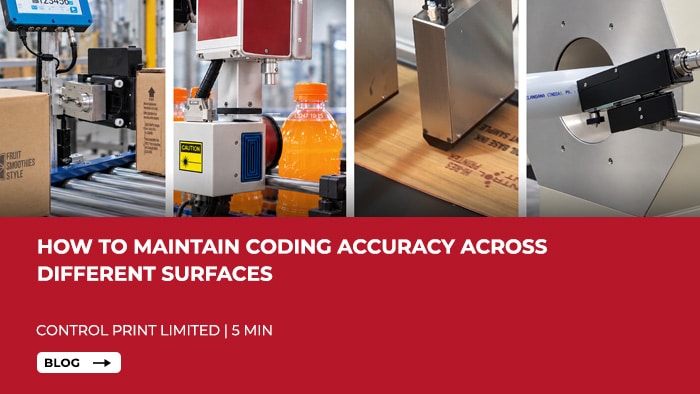
In manufacturing, product coding plays a vital role in ensuring accurate product identification, traceability, and compliance with applicable labelling requirements.

In manufacturing, product coding plays a vital role in ensuring accurate product identification, traceability, and compliance with applicable labelling requirements.

In today’s hyper-competitive and globalized marketplace, counterfeit products are no longer a marginal issue; they are a growing threat impacting industries from pharmaceuticals and food to cosmetics and industrial goods.
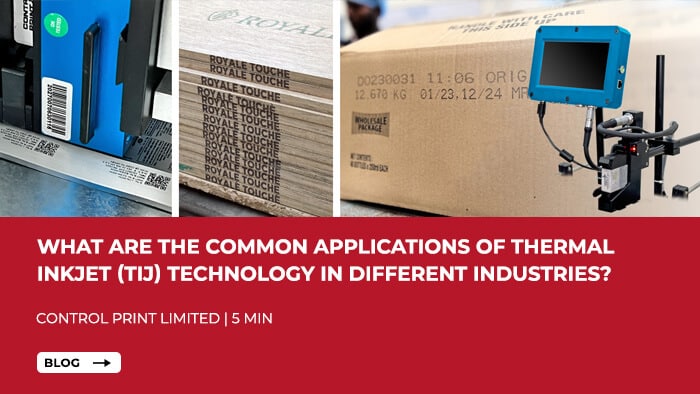
From regulatory compliance to brand differentiation, coding and marking have become central to modern manufacturing and Thermal Inkjet (TIJ) technology is leading this transformation.

Selecting the right batch coder is a key investment decision for any manufacturer. Whether you’re marking expiry dates, batch numbers, or QR codes, understanding what to expect in your buying journey, from demos and substrate testing to installation and service support, can make all the difference.
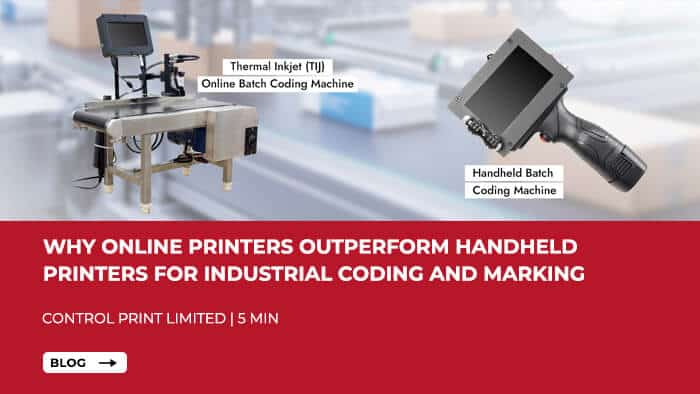
While handheld printers may seem like an accessible, portable solution for certain scenarios, they are often no match for the speed, reliability, and integration capabilities offered by online printers such as Continuous Inkjet (CIJ)

While coding itself may not prevent a recall, it plays a pivotal role in managing recalls efficiently by enabling traceability, protecting consumers, and limiting the scale of damage.

In the coding and marking industry, speed and precision are critical to ensuring product compliance, efficiency, and market competitiveness.

Control Print's Thermal Inkjet (TIJ) coding technology provides an attractive alternative for businesses looking to reduce printing expenses without sacrificing output quality. This blog will explore Control Print's TIJ technology strategies for reducing the overall printing costs for various industries.
In Thermal Inkjet Printers, tiny resistors create heat, and this heat vaporizes ink to create a bubble. As the bubble expands, some of the ink is pushed out of a nozzle onto the substrate, when the bubble pops a vacuum…
The building material industry deals with those products that are used for construction purposes, like cement, steel, concrete, wood and metal to name a few. The manufacturing equipment must be able to deal with constantly dusty environments and extreme temperatures,…